
Why Our Investors Benefit From a Dedicated R&D Week
Early-stage AI investing is high risk. But unmanaged technical risk is optional. Most investors understand market risk but integration risk is...
2 min read
Alice Pickersgill
:
Feb 19, 2026 3:00:22 PM
Most AI projects don’t fail because of bad ideas. They commonly fail because teams underestimate integration complexity.
APIs look clean in demos.
Agent frameworks look magical in tutorials.
Vector databases look interchangeable on comparison charts.
They aren’t.
At EHE Venture Studio, we build and invest in AI-first companies from pre-seed through to scale. The pace of AI change is relentless, new frameworks appear weekly, established platforms quietly change their APIs, and documentation rarely tells the full story. So we made a decision:
We never experiment on client budgets. That’s why we run a Dedicated R&D Week every quarter.
It’s a protected, full-team sprint.
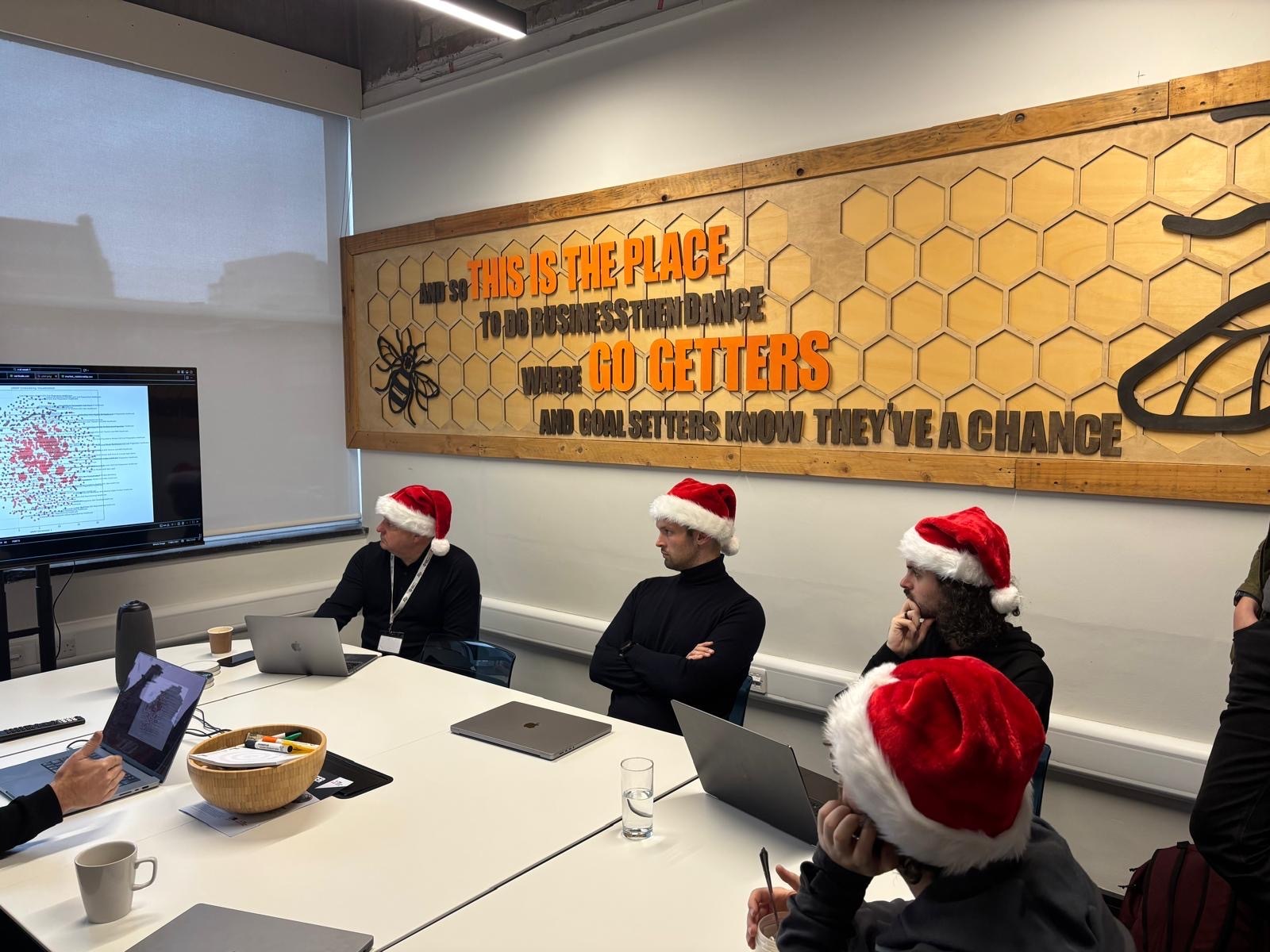
For one week, our engineering and product team pause client work and tackle a specific unpredictable problem in AI infrastructure. Not surface-level tutorials and not “hello world” demos, we push tools into messy, real-world scenarios:
Dirty data
Partial APIs
Conflicting schemas
Security edge cases
Performance bottlenecks
We focus on the critical 20%, the unknowns that determine whether a tool is viable at scale.
Venture studio companies outperform traditional startups with higher success rates and faster exits because risk is absorbed early and systematically. R&D Week is part of that discipline.
Instead of discovering integration failures three months into a build, we surface them in a sandbox environment before capital is deployed at scale.
The result: cleaner architectures, fewer rebuilds faster investor-ready milestones, and lower technical debt. That compounds over time.
On paper, pulling structured data from a CRM into an AI layer looks straightforward.
It isn’t.
During one R&D Week, we tested:
Hasura for unified querying
N8N for low-code orchestration
Unstructured.io for document ingestion
Here’s what we found:
The CRM’s API required stitching multiple endpoints to get usable context.
Low-code tools improved stakeholder visibility but introduced opinionated constraints.
Unified query layers simplified reads but complicated write operations.
The outcome?
The outcome?
We didn’t ship a shiny internal product. We walked away knowing exactly: How long CRM integrations really take; Where pricing risk hides; and Which architecture avoids rework.
One month later, a client requested a “simple CRM integration”. We scoped it accurately on day one - no under-quoting, no mid-project surprises, no budget overrun.
That’s the value of failing internally.
Each R&D Week follows a structured lifecycle:
1. Hypothesis - Clear problem statement. Strict scope. No polishing.
2. Parallel Build - Hackathon-style exploration across multiple approaches.
3. Daily Evaluation - Live demos. Brutally honest feedback.
4. Document Limitations - We capture what a tool cannot do. This is often the most valuable output.
5. Integrate Insights - We feed findings into our internal tech radar and playbooks.
6. Apply to Portfolio - Every portfolio company benefits from the updated architecture standards.
When you build with EHE Venture Studio, you’re not paying for experimentation, you receive:
Vetted tech stacks - tools pressure-tested under stress.
Realistic roadmaps - timelines based on integration reality, not marketing claims.
Sharper vendor decisions - we’ve already tested the alternatives.
Lower long-term cost - fewer rebuilds, fewer architectural U-turns.
Informed AI model selection - based on current model behaviour, not hype cycles.
This is part of how we combine capital, tech and advisory under one roof and why our venture studio model is designed to de-risk early-stage AI builds.
AI changes monthly, documentation lags behind reality; and most teams don’t discover friction until they’re already deep into delivery.
We choose to discover it early and we invest in our own learning so founders and investors don’t fund expensive mistakes.
If your roadmap includes:
AI agents
CRM data unification
Custom LLM workflows
Low-code automation layers
Regulated AI deployment
Speak to us before you lock your architecture. We’ll pressure-test your approach and tell you honestly where the risk sits because responsible innovation isn’t about moving fast.
It’s about moving fast with conviction.
Rich text modules are great since they are flexible and you can add an image, CTA, video, and of course... text!
Early-stage AI investing is high risk. But unmanaged technical risk is optional. Most investors understand market risk but integration risk is...
By Guy Remond with David Hunter