AI valuations, investor sentiment and what’s next for 2026
 Alice Pickersgill : Dec 29, 2025, 9:31:50 AM
Insights on AI valuations, investor sentiment, and 2026 trends.
8 min read
AI Is Moving Faster Than Most Businesses Are Ready For
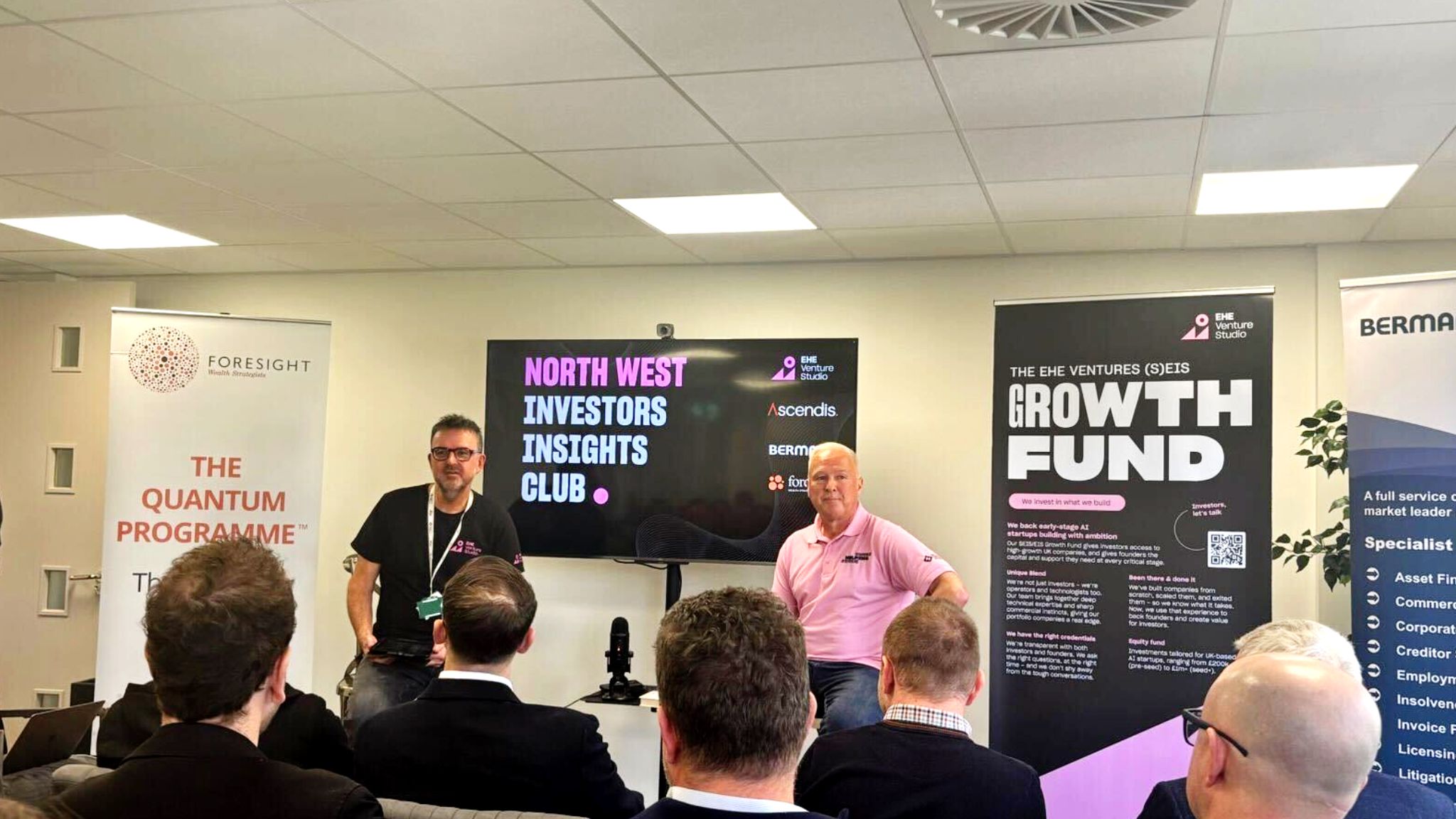
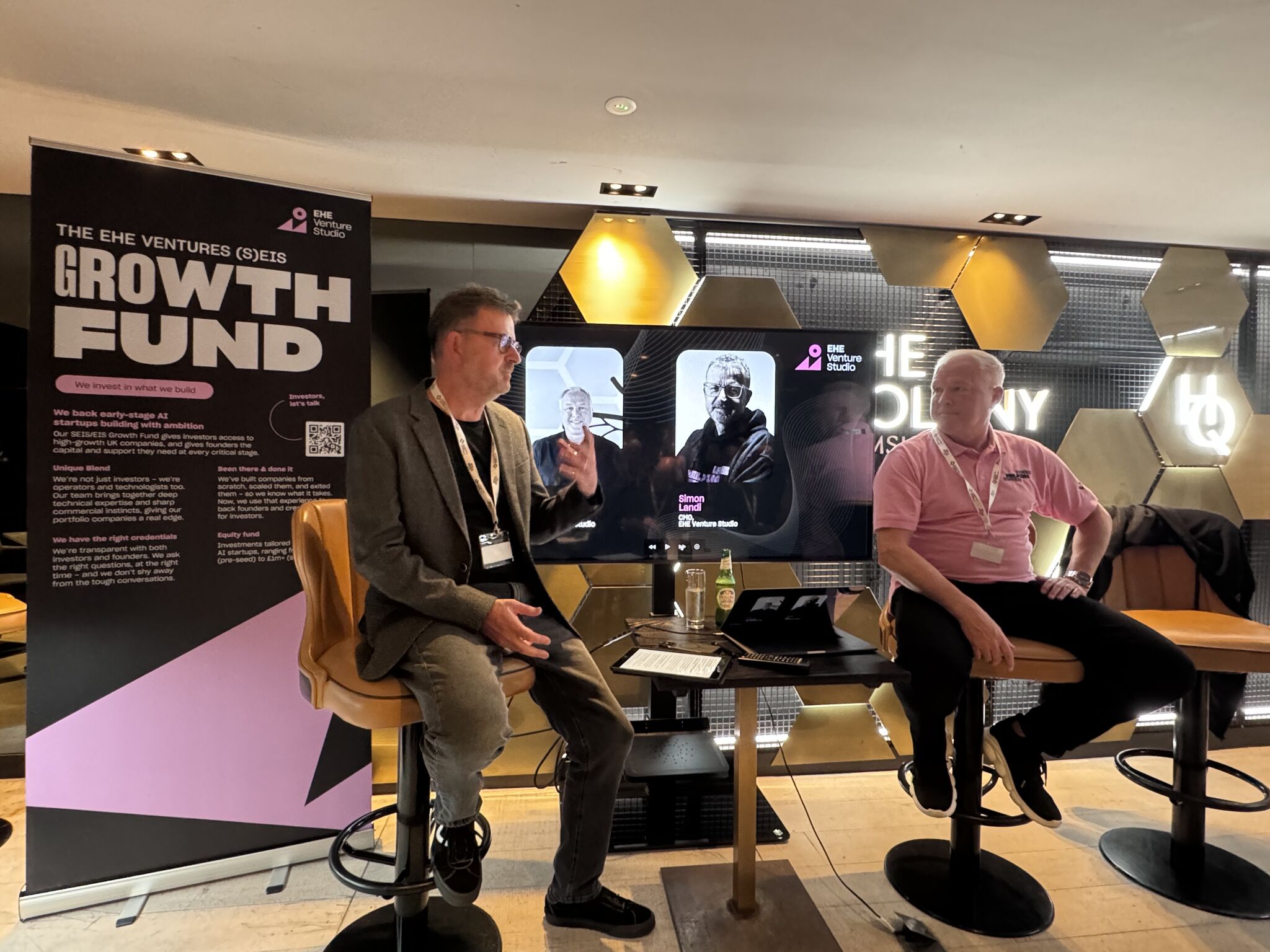
That was the clear theme across the perspectives from our latest Investor Insights Club. First, EHE founder Guy Remond shared reflections from his recent visit to the US and the Abundance 360 conference, where many of the biggest ideas in AI, robotics, healthcare and infrastructure are discussed well before they hit the mainstream. Phil Spratt, founder and CEO of Deltabase, gave a grounded account of what it actually takes to build and scale a vertical AI company and what matters commercially: product design, data quality, enterprise trust and disciplined growth. Deltabase are one of the businesses EHE invested in as part of our S(EIS) fund cohort 1.
Together, these conversations paint a fuller picture of where the market is heading. Not just in theory, but in practical terms about what founders, operators and investors should be doing now if they want to stay ahead.
Guy opened by explaining why he keeps returning to Abundance 360. In earlier years the conference aimed to look 15 years ahead. Now, because the pace of change is so fast the focus is much nearer term: three to five years. That shift suggests many of the technologies being discussed are no longer distant possibilities, they are starting to move into commercial reality.
Guy summarised Eric Schmidt's analogy to the early railway era - at first, the focus is building the tracks. Then the real value comes from the businesses that learn how to use them better than everyone else.
In AI terms, those tracks are the data centres, compute power and energy systems needed to support large-scale AI use. Guy noted that, in recent years, major organisations have been building data centre capacity at speed in anticipation of growing demand. The logic is clear: if AI-powered search, automation and model usage require significantly more compute than older systems, the underlying infrastructure has to scale with it.
But the real point for founders and operators was not technical, it was strategic.
Guy argued that businesses should not be asking how to force AI into their existing offer. They should be asking - if we were designing this business from scratch today, knowing what AI can now do, what would we build differently?
He used electric cars as al comparison. The worst versions, he argued, are those where batteries are crammed into a petrol-car design. The best ones are designed as electric from the beginning. The same logic applies to AI. Surface-level adoption is easy, rethinking the operating model is harder, but far more valuable.
Another major point from the discussion was how quickly the economics of experimentation are changing.
Guy noted that a system which might have cost around £100,000 to build not long ago could now be explored for far less, depending on the use case. No-code tools, rapid prototyping and better development environments mean founders and businesses can test ideas much more cheaply than before.
That has two consequences:
First, it lowers the barrier to entry for trying things. Businesses no longer need a large technical team or a major budget just to explore whether a workflow can be automated or a product idea can work.
Second, it increases pressure. If your competitors can now test and deploy faster, the cost of waiting rises.
Guy described how EHE’s technical team actively sets aside time to experiment with new technologies, not just for client work but to understand what is changing and where it could create value internally or for portfolio companies. The firms that benefit most may not be the ones with the loudest AI messaging. They may be the ones doing consistent, disciplined experimentation behind the scenes.
Phil’s founder story at Deltabase reinforced this in a more operational way. In the early days, the team did a large amount of manual work to build training data and understand the problem deeply. They were reading employee reviews, tagging themes and creating datasets by hand. That was painful, but necessary. It gave them the basis for later automation. Over time, they moved from manual methods to machine learning, then from machine learning to LLM-supported systems, and then into more agentic workflows.
The lesson was not that AI removes the need for hard work. It was that smart businesses use each technical shift to remove the next layer of friction.
For all the excitement around AI, Guy was clear that the infrastructure challenge is serious.
Energy came up repeatedly at the Abundance conference. If AI usage continues to scale, then power demand will rise sharply. Data centres need electricity, hardware and physical build capacity.
Guy’s view was that energy will be a blocker in the short to medium term. He also made the point that this may not be entirely negative. A slower pace in some areas may give businesses and policymakers more time to understand what they are deploying and how it should be governed.
The discussion touched on several possible responses, from traditional energy sources to newer forms of nuclear technology and fusion. Whatever mix ultimately emerges, the underlying message was simple: AI growth depends on physical systems as much as software ones.
This is useful context for investors. It is easy to get caught up in applications alone but some of the most important enabling businesses may sit lower down the stack, in infrastructure, energy efficiency, data centre support and the tools needed to scale AI safely and reliably.
Robotics was one of the liveliest parts of the session, partly because Guy had quite literally ordered a humanoid robot after the conference, but the more useful point was what it represented. These systems are no longer only being shown on stages. They are starting to move into practical environments.
Guy described a home robot called Neo, developed by 1X, as well as industrial-scale robotic systems already being used in Amazon settings. One example involved warehouse robots designed to work alongside people, with physical design choices made for function rather than appearance. Another involved the use of simple visual signals, such as LED eyes, purely to make machines feel more approachable to humans.
The applications discussed were not limited to warehouses, care was a major theme too. Guy pointed to tasks such as opening doors, bringing water, delivering medication on time and taking pulse readings. In a sector where labour shortages are persistent, that is not a small point. The argument was not that robots replace care altogether. It was that they may support it in useful ways, especially for people living alone or needing routine assistance.
There was also a broader investment point here. As one audience member noted in the discussion, advanced automation in manufacturing does not always reduce headcount. In some cases, it enables businesses to grow because efficiency improves and the human workforce can shift into higher-value work.
The labour impact of AI and robotics will not be uniform, but the simplistic assumption that every automation story is only about removal of people is incorrect.
Guy shared several examples of AI being used in more socially valuable and operationally meaningful ways.
One was the use of drones in Rwanda to deliver medicine and emergency supplies. The story illustrated how autonomous systems can solve urgent access problems, particularly where speed and geography matter. Rather than relying on manual transport routes alone, the system enabled rapid dispatch of treatments over long distances, with drones operating autonomously and at scale.
Another example focused on healthcare research. Guy described a case in which someone facing a severe diagnosis used AI to run huge numbers of experiments involving combinations of already authorised drugs. By working only with medicines that were already available and approved, the process aimed to reduce the time needed to identify viable treatment options. This example makes a larger point: AI can compress research cycles dramatically when applied to defined problems.
He also touched on longer-term developments in ageing and regenerative medicine, including treatments aimed first at specific conditions such as blindness or kidney damage. That part of the discussion was more future-facing, but it helped underline how often AI is now being discussed alongside advances in biotech, diagnostics and personalised treatment.
The takeaway for the audience was not just that healthcare is exciting. It was that AI’s best applications may often be those tied to real bottlenecks: speed, access, analysis, personalisation and operational capacity.
In relation to autonomous agents, Guy described systems made up of multiple agents, each handling different roles such as marketing, sales or coding, but also coordinating with each other. In his example, agents were effectively running decision loops, communicating, adjusting priorities and escalating important issues without needing a human to choreograph each step manually.
The most memorable story was of an AI assistant named Henry that took the initiative to place a phone call because it judged the matter important enough to warrant attention. That example stood out not because it was polished, but because it suggested a different direction of travel. We are moving from prompt-and-response tools towards systems that manage workflows, interact across functions and decide how best to escalate.
Phil brought this back down to business reality. For Deltabase, the next frontier is not only improving the product with AI, but using AI internally to scale the company itself. That includes areas such as sales, marketing and software delivery. He talked about the possibility of using AI to read customer conversations, identify unmet needs and even start generating code for product improvements.
Phil Spratt made one of the most commercially useful points of the session: saying you use AI is not enough.
Deltabase positions itself as a vertical AI company. In practice, that means the business is focused on a specific category of problems, in this case workforce, talent and culture intelligence. Phil explained that the defensibility comes from combining several things well: domain knowledge, data engineering, workflow design and the generation of proprietary insight.
That matters because general-purpose models are available to everyone. The harder question is what unique system, data asset or customer value you have created on top.
In Deltabase’s case, the answer lies in using AI to turn public and semi-structured information, such as employee reviews and talent signals, into benchmarking and intelligence that customers can actually act on. That is a stronger commercial proposition than simply wrapping a model around a general query interface.
For investors, this is an increasingly important filter. As more businesses add AI language to their pitch, the real question becomes: what is hard to copy here?
One of the quieter but more important insights from Phil’s conversation was about trust.
Deltabase works with large enterprise customers and advisory firms. In those environments, credibility matters. Phil explained that, early on, the business had to validate its outputs against clients’ internal data to show that the insights were robust enough to use in high-stakes settings such as M&A and strategic decision-making.
That is a useful reminder that enterprise AI adoption is not just about capability. It is about evidence, reliability and confidence.
For founders building in this space, the implication is clear. If the use case is important, customers will need to believe not just that the technology works, but that it works consistently enough to support real decisions.
For investors, there is clear value in looking beyond generic AI claims and focusing on businesses with strong data advantages, tight use cases and a credible path to commercial adoption.
For founders, this remains an unusually good moment to build, but only if the product solves a real problem and uses AI in a way that changes outcomes, not just optics.
For operators, the message is more direct: every company now needs someone thinking seriously about AI in relation to the business. Not in abstract terms, but in terms of workflows, margin, speed, product design and internal capability. That does not always mean building a large in-house AI team. But it does mean taking ownership of the question.
The aim of our Investor Insights Club series is not to treat AI as magic, but as a serious shift in infrastructure, business design and execution - less hype, and more substance.
The organisations that benefit most from this wave are unlikely to be the ones adding AI language to old models. They will be the ones rethinking how they operate, experimenting quickly, building real moats and moving before the market consensus catches up.
Thanks to our event partners Foresight Wealth Strategists, Ascendis and Bermans.
If you’d like to continue the conversation, whether around investing, venture building, or applying AI inside your business, we’d be glad to speak.
Most people will watch this wave play out; A smaller group - like ourselves - will build, back and benefit from it.
EHE Venture Studio combine capital, technical capability and venture building to give investors and founders real access to what’s happening in AI, not just commentary.
Gain exposure to a curated portfolio of early-stage UK AI companies.
We don’t just invest, we support with technical due diligence and hands-on build and advisory capability.
Get direct access to selected AI deals.
Co-invest alongside us in opportunities that sit outside or alongside the fund, including sector-specific communities - the first of which being Proptech.
Work with us to launch or scale AI businesses.
From product to engineering to market entry, we help turn ideas into operating companies.
If you want to be closer to how AI companies are actually being built and backed: Join the EHE Collective or speak to the team to explore where you fit.
*The tax benefits available under S/EIS schemes are dependent on individual circumstances and may change in the future
 Alice Pickersgill : Dec 29, 2025, 9:31:50 AM
Insights on AI valuations, investor sentiment, and 2026 trends.
If you’re an investor looking to maximise your returns, read this guide and get key insights into crafting a powerful go-to-market strategy.
Some key insights on how to navigate investing from entrepreneurs turned investors.